What Is the Ideal Chapter Word Count Guide for Writers?
Discover the recommended word lengths for each chapter by genre, book type, and pacing; get tips for short, long, fiction, and nonfiction chapters.
Quick Summary
- The length of the chapters varies from 1,500 to 5,000 words, but these are only general guidelines. The length depends on the purpose, genre, pacing and reader's experience of the chapter.
- Typical fiction chapters are 1,500–5,000 words, which provides room for character development, conflict, dialogue, and an important moment or turning point.
- Nonfiction chapters are typically longer (3,000 to 6,000 words) because they tend to require more space to explain ideas, to provide examples, and to lead readers through a clear lesson or argument.
- Short chapters can build speed and tension, particularly in a thriller, mystery, emotional moment or in the big reveals. When writing a short chapter, a few sentences won't suffice; it should still be complete and meaningful.
- Chapters can be long, but if they remain on the topic, they can be effective, particularly in fantasy, science fiction, historical fiction, or detailed nonfiction. Strategies help to keep longer chapters readable, such as scene breaks, subheadings, and good structure.
What Is the Average Chapter Word Count?
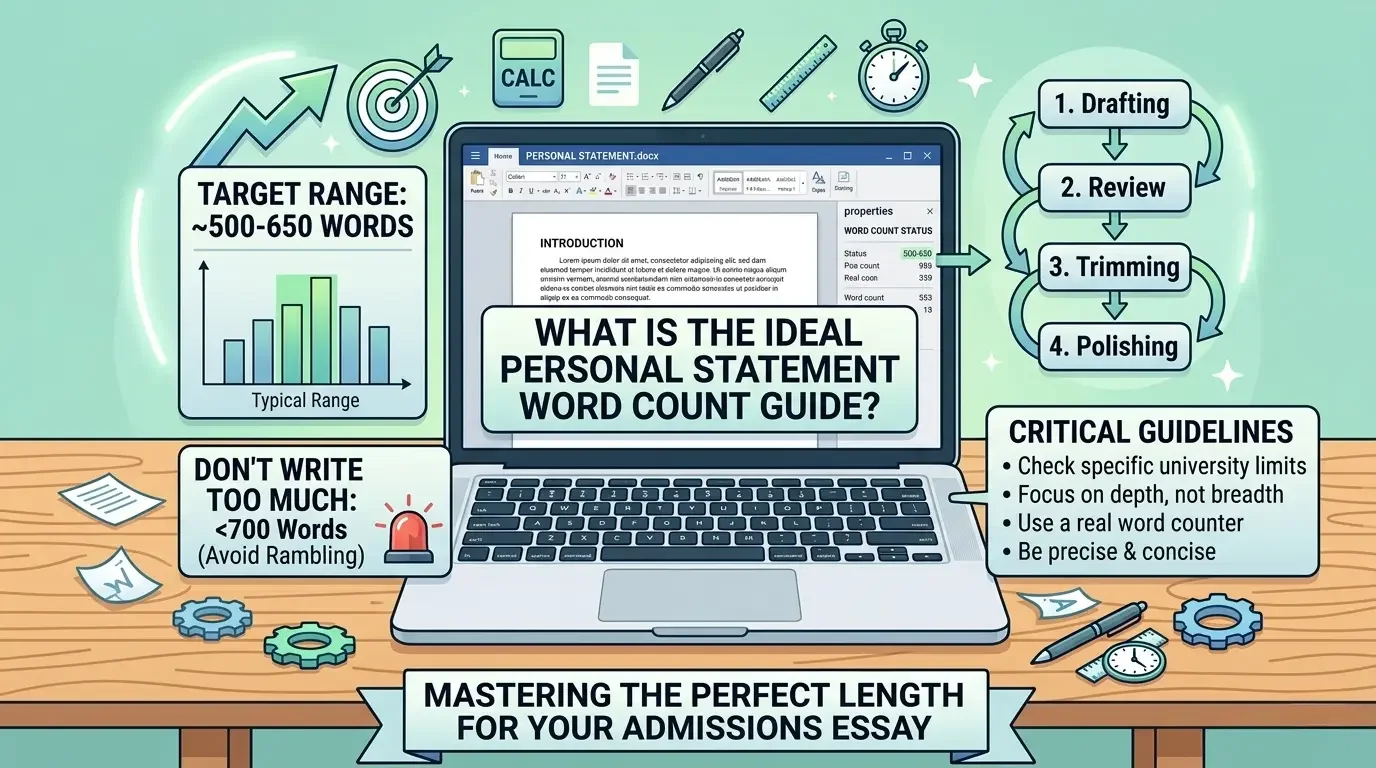
Most books have an average chapter length of 1,500 to 5,000 words.
Novels range between 2000 and 4000 words per chapter, and nonfiction chapters can be anywhere from 3000 to 6000 words, depending on the topic and depth of discussion.
The numbers are guidelines, however, not rules. There are some successful books with very short chapters of a few hundred words. Some opt for longer chapters (more than 8,000 words). The most important thing is that the chapter is complete, well-focused, and easy to follow.I also use the word count of each chapter as a handy editing tool, rather than a strict guideline for publication. My aim is to assist you in judging if each chapter is clear, complete, and comprehensible.
Ideal Chapter Word Count by Book Type
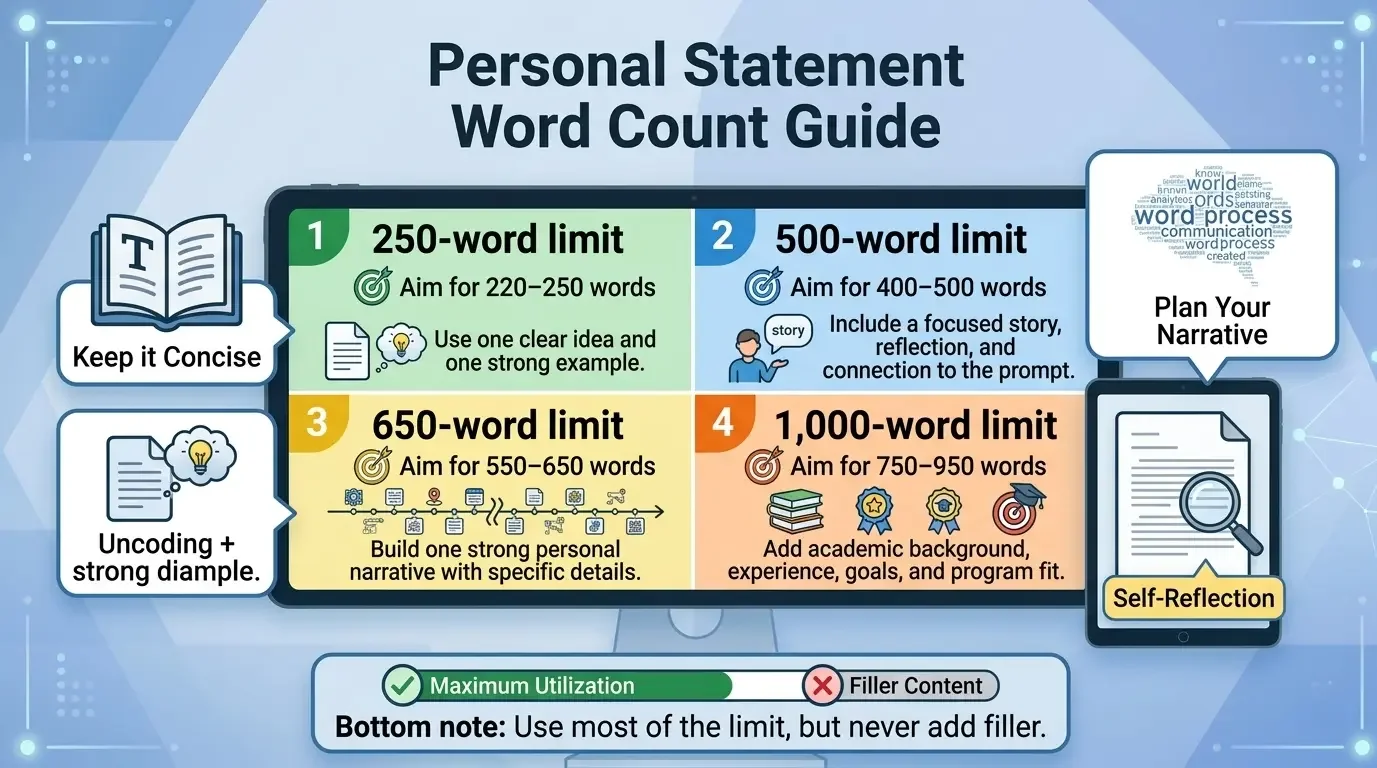
The pacing of books varies according to type. In general, a thriller will want shorter, quicker chapters, whereas a literary novel or nonfiction book will want longer, more detailed chapters.
Fiction Chapter Word Count
In most cases, a chapter length of 1,500 to 5,000 words is considered good for fiction.
For the writer there is enough space to expand on a scene, plunge into character motivation, advance the plot, and finish the chapter satisfyingly.
Fiction chapters should generally have one story action. This may be a scene, a conflict, a decision, a discovery and/or a turning point.
Nonfiction Chapter Word Count
Nonfiction books will typically have chapters between 3,000 to 6,000 words.
Nonfiction chapters typically require more space as they present information, examples, research, and lead the reader through a logical argument or lesson.
Each chapter in a nonfiction book should have one central idea. If the ideas in a chapter are too numerous, it might require further subdivision or splitting into additional chapters.
Memoir Chapter Word Count
Memoir chapters typically range in length from 2000 to 5000 words.
Memoir is a blend of story and reflection, so the length of the chapters vary based on the emotional content of the material being covered. If your memory is short, it might be best to make it a short chapter. If this is a more complicated life event, more space may be required.
Young Adult Chapter Word Count
Young adult fiction will generally contain chapters 1,500 to 4,000 words in length.
YA readers are expectant of quick pacing, emotional impact, and frequent shifts. Chapters do not have to be too brief, but should not be unnecessarily descriptive or slow to begin.
Middle Grade Chapter Word Count
Most chapters in the middle grades are shorter, typically 1,000–3,000 words.
Clear structure, fast pace and chapter-ends that help younger readers to want to read on.
Chapter Word Count by Genre
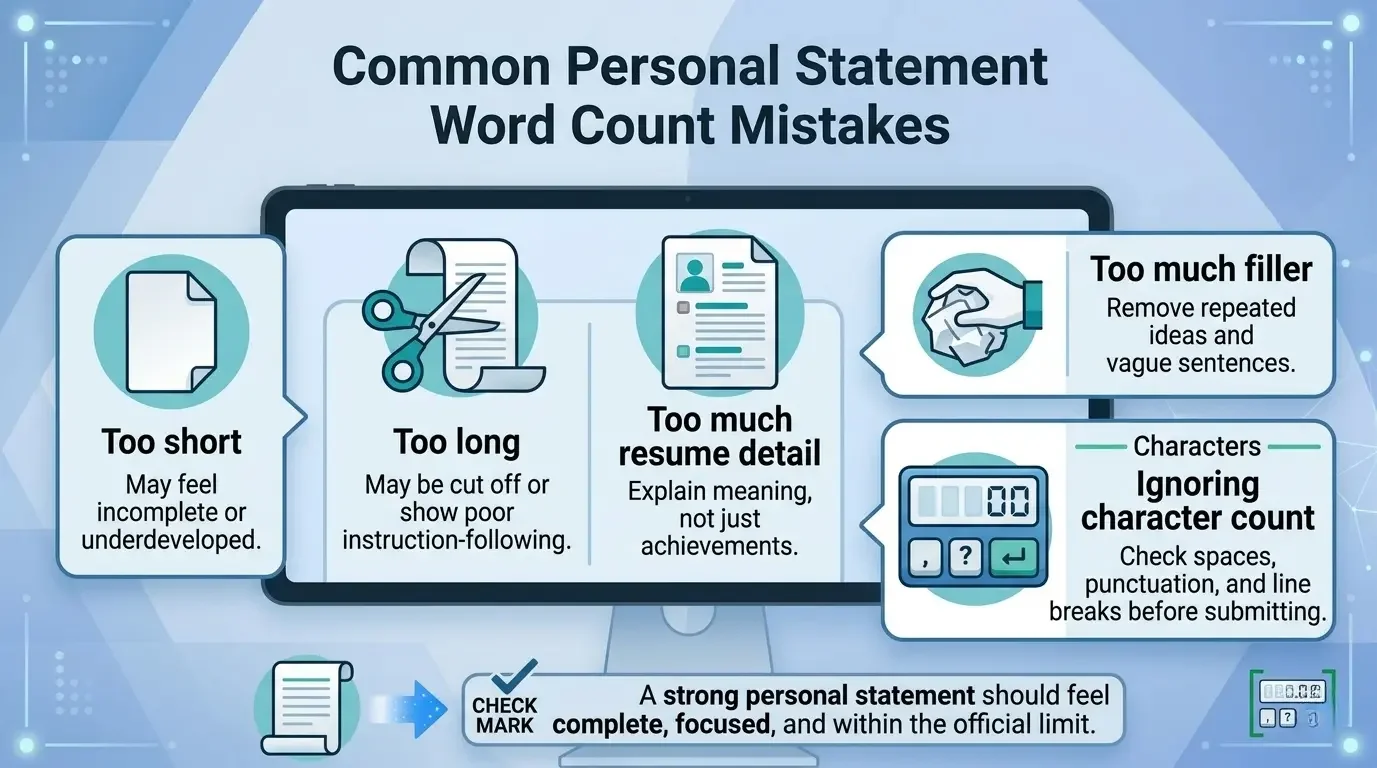
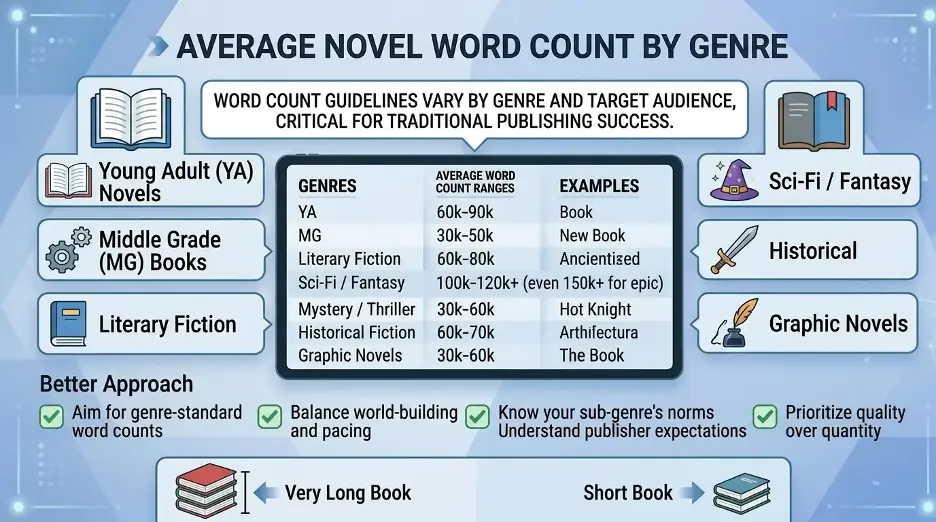
The length of the chapters is highly influenced by genre. Pacing chapters plays into readers' expectations of various types of books.
Thriller and Mystery Chapters
Thriller and mystery chapters tend to be shorter, typically 1,000 to 3,000 words.
Shorter chapters create urgency. They enable the author to switch easily from clue to reveal, danger to suspense. A lot of thrillers also have a question, twist or cliffhanger at the end of each chapter to keep the reader turning the pages.
Romance Chapters
The length of the romance chapters typically range between 2000 and 4000 words.
Romance chapters should have enough space for emotions, the dialogue, the tension, and the advancement of the romance. Even if the outside story action is still, the chapter should be moving the main relationship forward.
Fantasy and Science Fiction Chapters
Fantasy and science fiction chapters tend to be longer than most, typically 3,000 to 6,000 words.
These genres may involve world building, advanced technology, complicated settings, invented systems, magic rules, and/or political structures. It is possible to have longer chapters especially if you want to get into detail but don't let the exposition take over.
Literary Fiction Chapters
There's more flexibility with literary fiction. Chapters can be 1,000 to 7,000, or longer, words.
The length of chapters may vary in literary fiction due to the attention paid to voice, theme, character interiority and style. The key is rhythm. The chapters should be purposeful, not random.
Historical Fiction Chapters
Historical Fiction chapters range between 3,000 and 6,000 words.
Extra space may be required for writers to develop period detail, setting, cultural context, character conflict. But detailed history should enhance the story, not detract from it.
Is a 1,000-Word Chapter Too Short?
1000 words per chapter isn't too few, provided it has a purpose.The shorter the chapter, the better it performs in its task of creating speed, tension, emotion or sharp transition. They can also be helpful at the end of a chapter to provide readers a moment of contrast.A short chapter can seem weak if it doesn't have something to say. Word count is not a thing if it makes no difference at the end of the chapter. The problem is the goal.
Is a 5,000-Word Chapter Too Long?
If you keep a chapter within the scope of 5,000 words but are still interesting and informative, then it's not too long.Longer chapters are appropriate for an important turn in the story, emotional scenes, complicated conflicts, or a factual explanation. The danger is that readers may feel that the chapter is not 'moving' if there is no motion.
Even a long chapter can have some structure. Make the reader's attention follow the flow of the text (scene changes, subheadings in nonfiction, good transitions, and good progression).
How to Decide the Right Chapter Length?
Don't impose a word limit on each chapter; rather, determine what it is supposed to do.
In general a chapter should have at least one of the following:
Incorporate a problem, create conflict, disclose new information, demonstrate character change, build tension, solve a question, pose a new question, or bring the reader closer to the main resolution of the book.
If a chapter fails to do any of these, it could be revised, shortened or cut out altogether.
Focus on Pacing, Not Just Word Count
One of the best ways to manage pacing is through the length of the chapters.
Short chapters tend to make for speed. They help the reader think that things are rushing by quickly. Useful for action, suspense, arguments, discoveries, and emotional intensity.
The chapters are longer, which makes reading slower. This can be helpful when reflecting, building the world, discussing, making decisions, or at a pivotal moment.
A book that's done at a good tempo may utilize various lengths of chapters. This variation is used to give rhythm and make the reading go through without a flat spot.
Each Chapter Should Have a Clear Purpose
When each chapter has a job, the ideal word count for each chapter becomes easier to determine.
Determine the purpose of the chapter in a one-sentence summary before changing the length of the chapter.
For example:
In this chapter, the protagonist comes to understand that they no longer can trust their mentor.
In this chapter, you'll learn three habits that can lead to creative burnout.
"Here the reader is given the key that guides the investigation."
After establishing the objective, one can determine if the chapter is too brief, too lengthy or just about the right length.
When to Split a Long Chapter
If there are several topic shifts, several emotional turning points or if there are several large scenes in a chapter, it might be necessary to split the chapter.
When fiction: split a chapter when location changes, point of view changes, a major decision is made, tension resets.
In nonfiction, break a chapter at a new concept, a reader pause or at a section that is difficult to scan.
It is okay to split a chapter if it makes it more readable without losing any important content.
When to Combine Short Chapters
Short chapters are effective, but a series of short chapters can lead to a disjointed book.
If a number of short sections are about the same event, repeat the emotional beat, or have no development, consider combining chapters in such a way that they are not combined word for word.
A short chapter ought to be tight and purposeful. If it doesn't feel complete, then it may belong in another chapter.
Should All Chapters Be the Same Length?
No, all chapters are not required to be the same length.
Try to have the chapters all the same length to give a nice pace to the reading, but it's not strictly essential. Indeed, there is a usefulness in variation which can make a book more readable.
Impact is achieved through a sudden short chapter. If the chapter is longer, it may indicate that it is important. The key is that it is under control and intentional.
Chapter Length and Reader Experience
Pacing is felt, but not really counted by readers.
Chapter ending at right time provides reader with a sense of progress. It is a way to give them a moment of silence and prompts them to keep going.
Oftentimes, good chapter endings have a decision, question, reveal, emotional change or an unresolved tension. The purpose is not always to leave the audience hanging on a cliffhanger. Often the best finish is an introspective moment that alters the reader's perception of the narrative.
Practical Chapter Word Count Guidelines
Here is a basic guideline for writers:
- In fast-paced fiction, seek to have 1,000–3,000 words per chapter.
- If it's a general fiction novel, you should try to do 2,000 to 5,000 words a chapter.
- The recommended word count is 3,000 to 6,000 words per chapter for historical fiction, fantasy and science fiction.
- If you're writing nonfiction, expect to write from 3,000 to 6,000 words per chapter.
- For middle grade books, try for 1000-3000 words per chapter.
- When writing a book for young adults, try to keep the chapters between 1,500 and 4,000 words.
These ranges are not absolute but a good guideline, and should be disregarded if the need of the book requires otherwise.
Common Chapter Word Count Mistakes
A frequent error is simply extending a chapter to meet the word count requirement. This can often result in filler, rewording, unnecessary dialogue or over-explaining.
Another error is a premature chapter closure. The reader might not be able to see the value of the chapter, and it might need more development.
Sometimes writers don't pay attention to the expectations of the genre. It can be challenging to write a slow but 7000 word chapter in a thriller, and too thin in a dense nonfiction book.
The ideal way is to combine the reader's expectations with the natural form of the material.
How to Revise Chapter Length
Revise each chapter individually when revising.
Questions: What if the chapter does not begin at the start? Too much set-up in many chapters. Beginning near the action can help short the word count and speed up the story.
Then ask if the chapter is the end where it should be. The ending should have the reader eager to read more.Lastly, examine to see if each scene, paragraph, and section contributes to the chapter's purpose. If it doesn't contribute to the tension, clarity,emotion, information, and/or movement, it might need to be cut.
What Is the Best Chapter Word Count?
The optimum chapter word count is the number of words required to accomplish the purpose of the chapter without losing the reader's focus.
This usually translates to 2,000- to 5,000-word chapters in a lot of books. In faster music, it might be better to have shorter chapters. If the book is a complex fiction or nonfiction, longer chapters may be suitable.
It is not just the length of the chapter that determines the ideal one. It has focus, pacing, structure, and reader engagement.These are suggested word counts and not guidelines. A chapter should be the length to do its job and not too long to bore its way across the reader's mind.
Interesting Research Facts
Full citations are in Sources below.
Chapter length naturally varies for pacing.
Research using quantitative approaches to linguistics reveals that the length of the chapters may vary unpredictably within a text as well as according to a standard.
Source: ResearchGate — Chapter-length characteristics for 72 chapters from five novels
Only a small portion of a chapter carries the core plot.
The BookSum data indicate that the average size of chapter summaries is about 15% of the length of the chapter, implying that a lot of the chapter's content is used for pacing, dialogue, and scene building.
Source: ACL Anthology — BookSum, 2022
Chapter length can reflect author style.
Stylometry studies employ measurable characteristics of authors' writing styles to identify them, including patterns in the length of chapters and sentences.
Source: ResearchGate — Author Identification using Stylometry
Non-fiction chapters often follow clearer structural ranges.
Academic and thesis writing suggestions usually advise treating the sections of a chapter with care, with the introductions and conclusions being more significant but less conspicuous parts of the thesis.
Sentence variety helps readers stay engaged.
Sentence length and punctuation use variations has been proposed by quantitative text analysis to alleviate reader fatigue and to structure longer texts.
Frequently Asked Questions
1.How many words should be in a chapter?
Typically, chapters will range from 1,500 to 5,000 words. I like this range, but it's not a hard rule.
2.Would you say that 1000 words is not enough for a chapter?
If there is an important event that occurs, then a 1,000-word chapter is not too short. A short chapter is fine where it builds tension, evokes emotion, or is a good turning point.
3.Is 5,000 words too long for a chapter?
You should not write a chapter of more than 5,000 words, unless it remains focused and easy to follow. If the chapter feels slow, consider adding scene breaks or adding more structure.
4.Is it necessary that all the chapters be of the same length?
Don't worry, chapters don't have to be of equal length. I believe that variation is often essential to make a book feel more natural and well paced.
5.Is it possible to have one scene in a chapter?
Yes, a chapter may be one scene if the scene is supposed to be a complete scene. Some kind of sense still needs to be accomplished, but it needs to be the movement of the story, or something the reader can take away.
6.How many words in a fantasy chapter?
The chapters in a fantasy tend to be longer, typically 3,000 to 6,000 words. This allows for world building, conflict, setting and character development.
7.So if you're writing a thriller, how many words should a chapter be?
Thriller chapters tend to be short, typically 1,000-3,000 words. You can use short chapters to build speed, suspense and urgency.
8.Should I add more words, just to make a chapter longer?
Not necessarily, no, I don't recommend putting filler in to get a word count. A chapter should be as long as it needs to be, but each scene and each paragraph should have a purpose.
How we reviewed this article:
Share this article