Word Count vs Character Count: What's the Difference?
Understand the distinction between word and character count, when to use each, and why both matter for SEO, writing, and online content.
Quick Summary
- Word count is the number of words in a text: Good for blog posts, essays, articles, reports and other content that require length and depth.
- Character count: counts each letter, number, symbol, punctuation and space. When writing for limited spaces, such as meta titles, descriptions, forms, ads and social media posts, it is important to keep in mind.
- The main difference is what each one counts:Each one counts, but the main difference is the nature of the count. Word count is about the words in the text, and character count is about the number of individual characters in the text, including spaces if counted.
- The word count is more meaningful for the depth of content: I use it to see if a piece of writing is clear, complete and doesn't have superfluous padding.
- Useful for space requirements is character count: I'm using it to ensure short fields of text don't get cut off, rejected or abbreviated in different platforms.
What Is Word Count?
Word count: The number of words in a text.
For example:
Word count matters.
There are 3 words in this sentence:
- count
- matters
Word count is often employed when the emphasis is on length, depth and structure of written material. It can be used to assess if a piece was short, detailed, comprehensive or too long for the purpose. Word count is used when editing content to determine if it is too short, too long or detailed for the purpose.
Common Uses of Word Count
For the following you will find word counts:
- Blog posts
- Essays
- Articles
- Research papers
- Book chapters
- Product descriptions
- Website pages
- Reports
- Cover letters
- Speeches
- SEO content briefs
For example: A teacher could ask for a 1000 word essay. The length of the blog post might be requested by a content editor and may be 1,500 words. There may be a minimum word count requirement for manuscripts submitted to a publisher. In these situations, the objective is not only to narrow down space, it's to direct the depth of interpretation.
What Is Character Count?
Character count refers to an entire text, meaning that the total number of characters in the text is the count. The character may be a letter, a number, a punctuation mark, a symbol or space. Typically I will consider the character count for SEO titles, meta description, social media, forms and any text area with limited space.
For example:
Hello!
This text has 6 characters:
- H
- e
- l
- l
- o
- !
If there is a space, then it is a plus one!
For example:
Hi there
There are 8 characters in this text (including the space):
- H
- i
- space
- t
- h
- e
- r
- e
If not for the space, it has 7 characters.
Common Uses of Character Count
Counting is typically employed for:
- Meta titles
- Meta descriptions
- Social media posts
- SMS messages
- Online forms
- Usernames
- Passwords
- Headlines
- Search ads
- App store descriptions
- Email subject lines
- Database fields
Character limits are frequently used when there is limited space or when the content needs to be located in a specific area.
Word Count vs Character Count: The Main Difference
The distinction is quite straightforward:
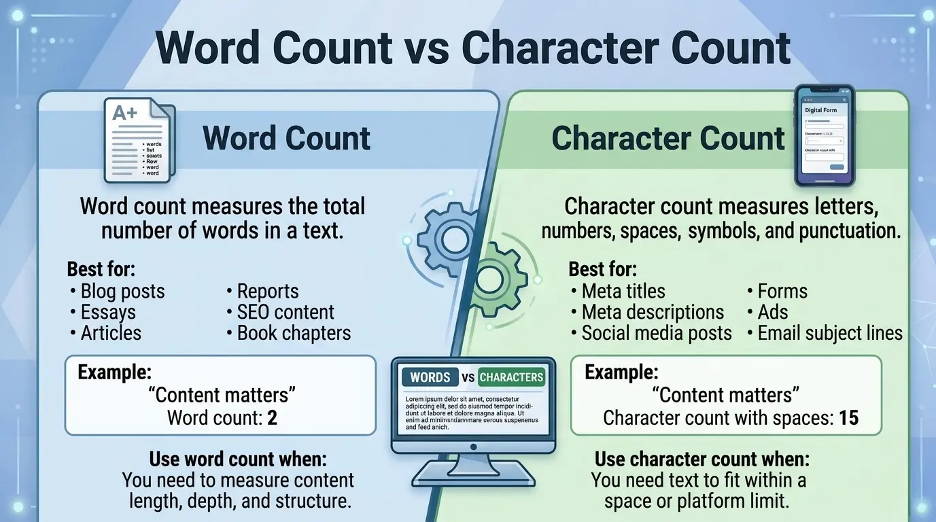
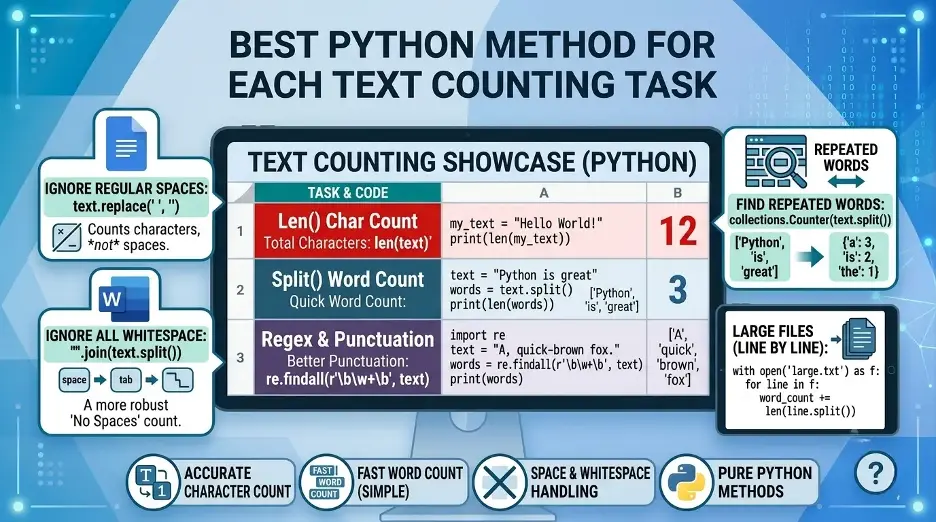
Words are measured using word count. The character count is the count of each individual character.
There may be multiple characters in a word. For Example: The word “content” has 1 word and 7 characters.
A comparison of the two you can make is this:
| Text | Word Count | Character Count Including Spaces |
|---|---|---|
| SEO writing | 2 | 11 |
| Content matters | 2 | 15 |
| Write better blogs | 3 | 18 |
| Word count vs character count | 5 | 29 |
Content length and detail is better measured by Word count. Space count, formatting and platform limits are better measured in character count.
Character Count With Spaces vs Without Spaces
There are two ways to count the characters:
- Characters with spaces
- Characters without spaces
This is important since spaces may be interpreted differently across various platforms and tools.
Characters With Spaces
Everything from the letters to punctuation, numbers, symbols, and spaces.
Example:
Good writing
Character count (including spaces): 12
“Good” to “writing” is included.
Characters Without Spaces
This will not include spaces but will include letters and punctuation.
Example:
Good writing
Character count without spaces: 11
Typically, platforms with stringent text restrictions like social media sites or form text boxes count spaces as characters. That's because there's a space that needs space.
Why Does Word Count Matter?
- The word count is important because it will determine the amount of information you can provide as well as explain a topic in depth.
- The short word count might be helpful for quick answers, summaries, and simple pages. Detailed guides, tutorials, comparisons, and articles about SEO might require more word count.
Word Count Helps With Content Depth
- An article that is 300 words long can introduce a topic but may not explain the topic in detail. The 1,500 words of the blog post give you more space to include examples, definitions, comparisons, and practical tips.
- In terms of SEO, the word count should be aligned with the search query. A brief question might require a longer response. If the subject is complicated it can be useful to have a longer article and a more detailed breakdown.
- It is not to write longer words to make a longer word count. The intent is to convey a clear and complete message on the topic.
Why Does Character Count Matter?
The platform has space limitations and character counts are important.
For example: A meta title that is too long may be cut off in search results. If the limit is surpassed, an article on social media cannot be published. Text with more than a certain number of characters might be rejected in a form field.
Character count is a useful tool to ensure you do not go over the technical limits and yet still convey your message.
Character Count Helps With SEO Snippets
In SEO, character count is a critical part of the elements which are important for:
- Meta titles
- Meta descriptions
- URL slugs
- Headings
- Schema fields
- Image alt text
- Search ad copy
While search engines do not always adhere to a set limit for displaying the title and description, a short title and description can make it easier to read and can increase chances for click-throughs.
Word Count and Character Count in SEO
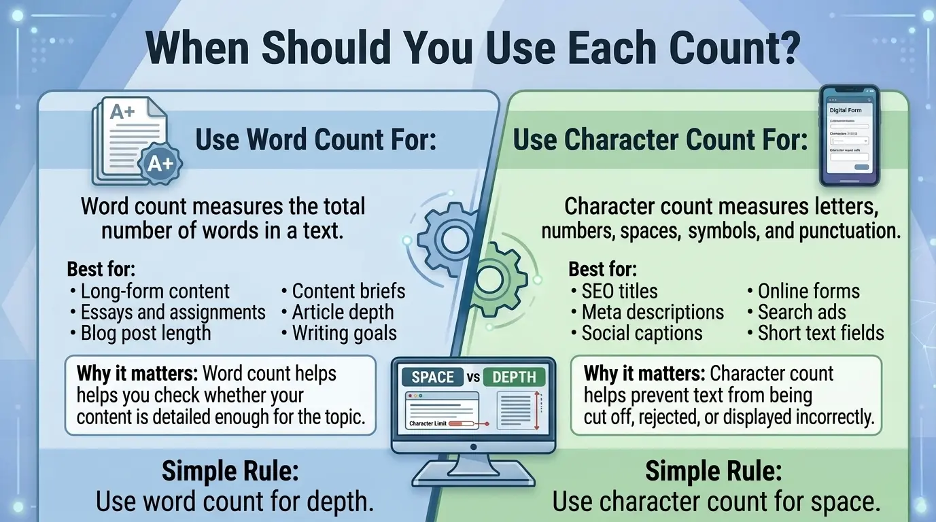
The word and character count are both important and have different purposes in SEO. For SEO I use word count to align with the search intent and character count to help titles and descriptions be displayed in search results.
Word Count in SEO
- The number of words on a page is a factor that is taken into account in determining the page's comprehensiveness. The job of search engines is to rank content that meets the search intent of the user. In many instances, this means that there are enough words to convey the information correctly.
- But quantity doesn't necessarily translate to high rankings! If the article is too long, or if there is too much repetition or weak explanations, or if there are irrelevant sections, it will not do well. If it is a short article, it can still be a good ranking article if it answers the query clearly.
- To optimize for search engines, it's best to use a lot of words to address the topic without padding it out with filler content.
Character Count in SEO
Elements in search results or with display limits are more important by number of characters.
These include:
- SEO title tags
- Meta descriptions
- Page headings
- URLs
- Product titles
- Structured data fields
For example: A title tag generally should be short enough to fit in the search engine results. Meta description should be clear, concise and of proper length, so it can be an effective click-through booster.
Examples of Word Count vs Character Count
Here are some examples of how to apply the concepts.
Example 1: Short Sentence
Writing improves clarity.
- Word count: 3
- Character count with spaces: 24
- Character count without spaces: 22
Example 2: Blog Title
Word Count vs Character Count: What's the Difference?
- Word count: 8
- Character count with spaces: 53
- Character count without spaces: 46
Example 3: Meta Description
Understand the difference between word count and character count and when to use each and why both are important for SEO, writing and online content.
- Word count: 23
- Character count with spaces: 135
This is a good length for a meta description, it's clear, concise and informative.
- Some social media sites have character limits due to the requirement that posts fit a format or structure.
- If a post is long, has hashtags or contains a link, it could still be too long even if it's only 20 words. A post, however, with a lot of short words might be more likely to meet the guideline.
- The number of characters is more significant than the number of words for social media writing. Word count does have an impact on readability, though. For shorter posts, you may need to write a message that is easy to scan.
Word Count vs Character Count in Academic Writing
Academic writing is more of a word count game.
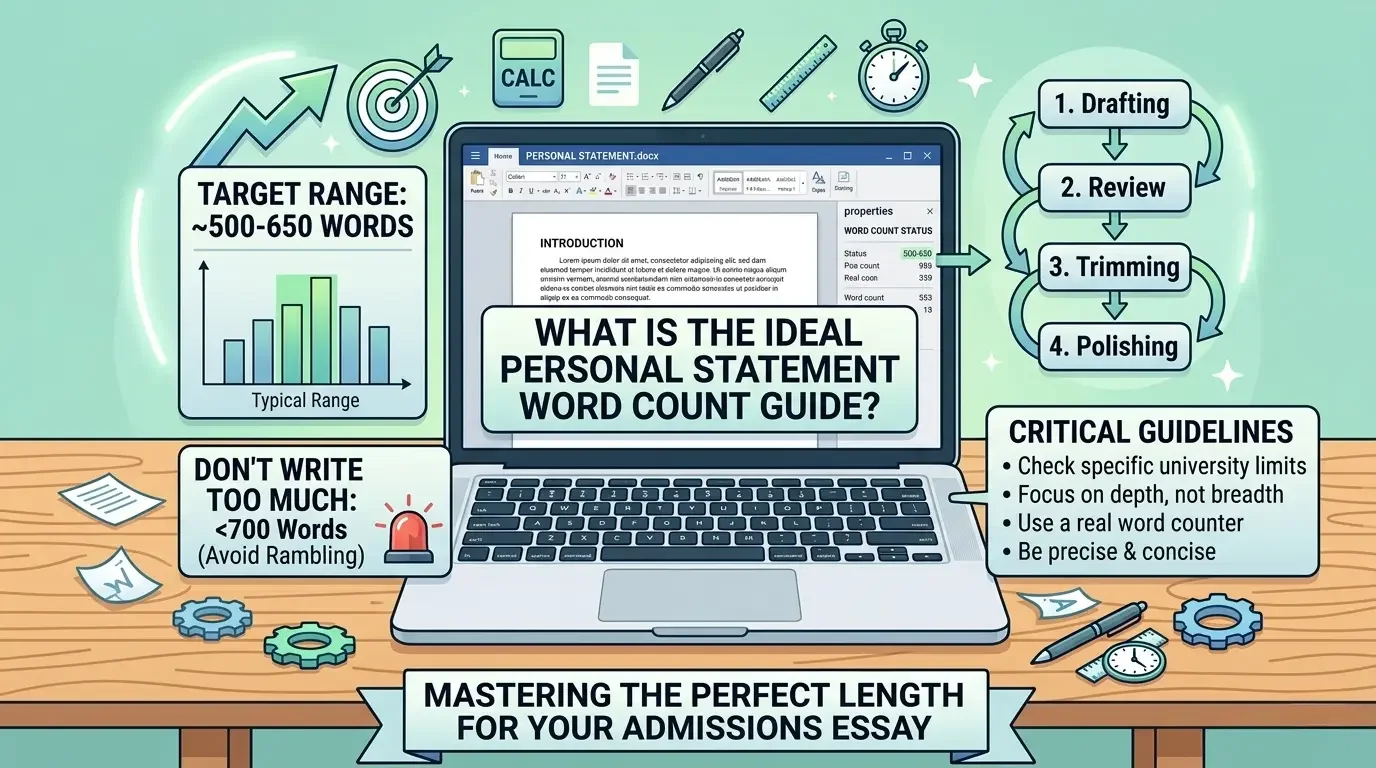
Assignments, research papers, dissertations and essays can have a minimum and/or a maximum word count. This assists teachers and institutions regulate expected level of analysis.
For Example: A 2,000 word essay needs to be more developed than a 500 word response. The writers should provide explanations, evidence, and arguments within the allotted length.
There are instances in academic writing where character count is still relevant – in abstracts, titles, keywords, or online submission forms.
Word Count vs Character Count in Professional Writing
- Both are commonly employed in professional writing.
- Business reports can be set a word-length limit. There may be a character limit for a resume summary. A LinkedIn headline or email subject line, or product description, might need to be constrained in length.
- Use word count to control the quality of your content and character count to control how your content will look in the format you are publishing it in.
Is Word Count More Important Than Character Count?
- Both are not always more significant. This will vary according to the goal of the writing.
- It is important when you want to limit the length, depth, or structure of a text. Character count is more important when you need to fit text into a limited space.
- Word count typically is more important for blog posts, articles, essays and guides. Meta descriptions, social media posts, ads, and forms tend to have more of an emphasis on character count.
- In the best content, it may well be that both are taken into consideration.
Best Practices for Using Word Count and Character Count
The following are best practices for using both:
- Match words with purpose of content.
- Please refrain from adding words for the sake of the length of content.
- Also check the character count in SEO titles and descriptions.
- Count spaces when composing for absolute length constraints.
- Keep headlines and meta tags short and to the point.
- Focus on being clear, not lengthy!
- Consider content that will only be viewed on a mobile or desktop device when display is important.
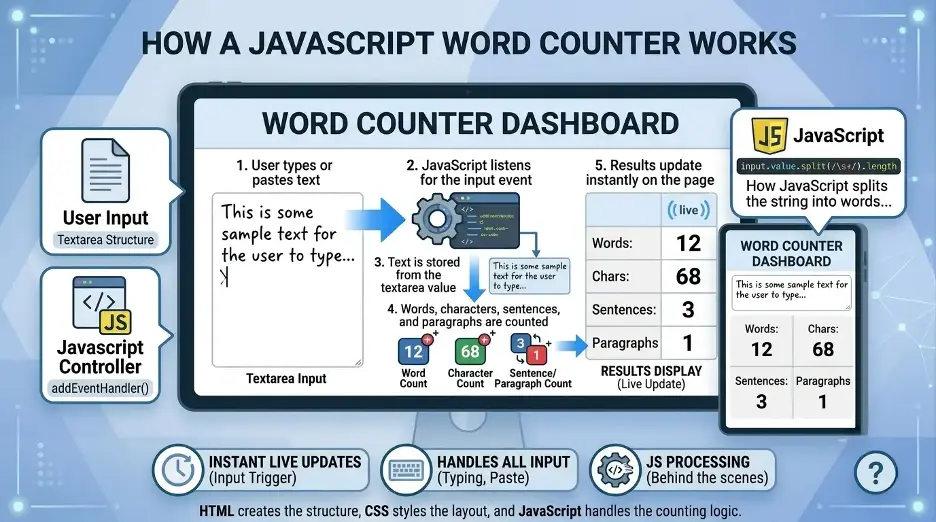
- Before publishing, use a word and character counter to verify the number of words and characters.
Good writing is not about the highest, most numerous count. It's all about the right amount of text to communicate effectively. I use a word and character counter before publishing content to check both counts (rather than trying to do it manually).
Interesting Research Facts
Full citations are in Sources below.
Short word counts can be unreliable
Lexical diversity metrics for texts under 500 words are highly variable. Greater consistency is typically observed at the 1,000–2,000 word range, making shorter texts less reliable for measuring vocabulary breadth.
Word-count tools may calculate differently
Microsoft Word and online submission systems can differ in how they count punctuation, hyphenation, and spaces, which can cause discrepancies and issues with academic or professional submissions.
Character limits change writing style
Twitter's expansion from 140 to 280 characters demonstrated how tight limits drive more abbreviations, contractions, and word omissions. Looser limits changed how users expressed themselves.
Character length reflects text complexity
In automated text analysis, the average number of characters per word is used to measure writing style, academic tone, and complexity—making character-level metrics useful beyond just space limits.
Better writing does not always mean more words
Research on writing revision shows that stronger essays are often improved with little change in length. Writers improve quality through clearer phrasing, better organization, and conciseness—not by adding words.
Frequently Asked Questions
1. Do I need to fit within the word/character count limit?
Do not exceed the limit as specified in the instructions. Use Word Count if it indicates 500 words. Character count if it says 1,500 characters.
2. Do spaces count as characters?
Yes, spaces are character counts in most online forms, SEO fields and social media.
3. How can my character count be high, if I have a low word count?
Long words, spaces, punctuation, and numbers and symbols can add more characters even if there are less words in the text.
4. Is it more important to get keywords in the meta description?
Yes. Character count is more significant with meta descriptions since they must have the right length in search results.
5. Which option (word or character count) is preferable for essays?
Word count is more significant for essays as it dictates the length and depth of the answer that is expected.
6. If my word count is below the word count limit, can I exceed the character count?
No. When there's a character limit, respect it or your text could be cut off or rejected.
7. Can AI tools provide accurate word and character count?
Not always. Use a separate word and character counter to check final work is preferred.
8. What is the best count to use before posting an online count?
Check both. For content length use word counts and use character counts for titles, descriptions, forms and social media posts.
For tool-specific guides, see word count in Google Docs and word count in Microsoft Word. Need to check both counts instantly? Use our free word counter.
How we reviewed this article:
Share this article
Word Count vs Character Count in Social Media