How Many Words Should a Product Description Be?
Discover the perfect product description length for ecommerce, SEO, and conversions; and get practical advice on word count for various types of products.
Quick Summary
- Most product descriptions will be 150-300 words, which is a sufficient amount of space to explain what the product is, point out some of the key benefits of the product, list some important features of the product and answer some of the common questions of the buyer.
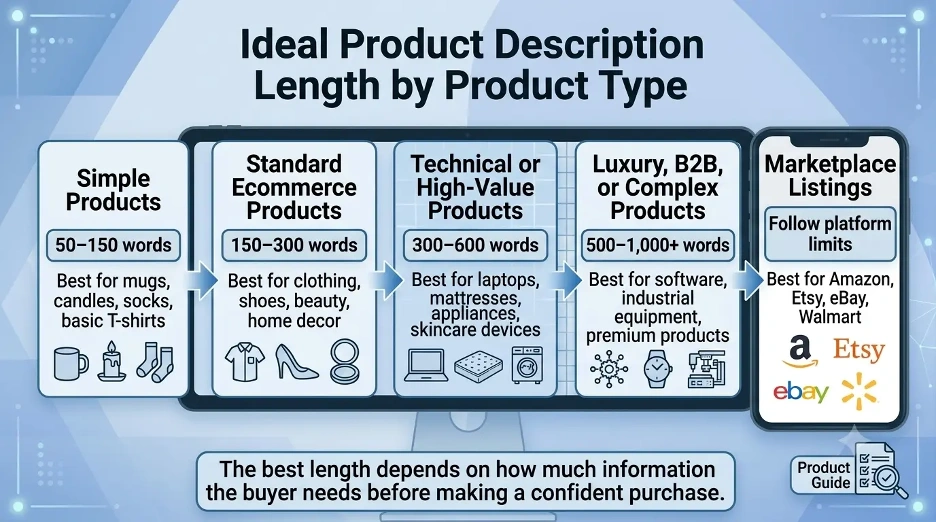
- If the description provides all of the major information that consumers would want about the product, simple products like mugs, socks, candles and basic T-shirts can be described with 50–150 words.
- More words are required for more complex or expensive products – Technical, luxury, B2B, high-value products or products with specifications will often require 300 – 1,000+ words, as the buyer will want to know more about the product: materials, compatibility, warranty, use cases, and trust signals.
- It's important that a product page contains original product descriptions, natural keywords, product attributes, semantic terms, and phrases that show the intent of a buyer, rather than copied product descriptions from the manufacturer or repeated keywords.
- The key is to structure the page just as important as the word count, with a short summary, bullet points, main description, specifications and FAQs so that the shoppers can quickly scan the page for the information they are looking for.
Ideal Product Description Length
For most online stores, use these general guidelines:
| Product Type | Recommended Word Count |
|---|---|
| Simple products | 50–150 words |
| Standard ecommerce products | 150–300 words |
| Technical or high-value products | 300–600 words |
| Luxury, B2B, or complex products | 500–1,000+ words |
| Marketplace listings | Follow platform limits and best practices |
A good product page generally has a brief description at the top and more elaborated information at bottom. This is because it gives the shoppers and search engines an instant understanding of the product. I created this guide to help ecommerce store owners and product writers not overthink word count and select a realistic product description.
Why Product Description Length Matters?
The length of the product description will impact on three major areas:
- Customer confidence
- Conversion rate
- SEO performance
If the description is too brief, it may leave a purchaser with questions. This can cause hesitation, cart abandonment or customer support queries.
If your description is too lengthy and unorganized, it can overwhelm customers. Users tend to skim through product pages, particularly on mobile devices. However, if the content is dense, repetitive, or difficult to read, they might not make it through to purchasing. On our experience, customers put more trust in a product page that easily captures and answers the major questions they ask. Opt for a product description that combines clarity, persuasion and search intent.
What Is the Best Word Count for a Product Description?
A main product description of 150-300 words is a good length for most ecommerce sites.
This provides you with a space for you to cover:
- What the product is
- Who it is for
- Key features
- Main benefits
- Materials, size, or specifications
- Use cases
- Care instructions/compatibility information
- Other options are available and why they should be avoided.
Sometimes, less is more when it comes to simple products. More detail may be required for more complex products. I suggest to select word count according to the product price, complexity, and detailed information for a buyer to buy a product.
It's not just a question of how many words a product description needs to contain, but how much info does a buyer need before making a decision?
Product Description Length Comparison
| Type | Word Count | Best For | Examples |
|---|---|---|---|
| Short description | 50–150 words | Simple, low-cost products | T-shirts, socks, mugs, candles |
| Standard description | 150–300 words | Most ecommerce products | Clothing, shoes, beauty, home decor |
| Long description | 300–600 words | Expensive or technical products | Mattresses, laptops, appliances, skincare devices |
| Long-form page | 500–1,000+ words | Complex, luxury, or B2B products | Software, industrial equipment, medical devices |
How Product Description Length Affects SEO?
Product descriptions aid in the understanding of the page by search engines. Long product pages with numerous specific sentences can be difficult to rank because they are not very different from those of the other products.
Product descriptions that are optimized for search engines must contain:
- Primary keyword
- Secondary keywords
- Product attributes
- Use cases
- Buyer intent phrases
- Related terms
- Brand and category terms.
- Common customer questions
For Example, if the product is a leather laptop bag, then some of the semantic terms could be:
- genuine leather laptop bag
- Modern-day working bag for professionals.
- padded laptop compartment
- adjustable shoulder strap
- business travel bag
- office laptop tote
- leather briefcase alternative
- fits 15-inch laptop
These words will give the search engine a more complete understanding of the product.
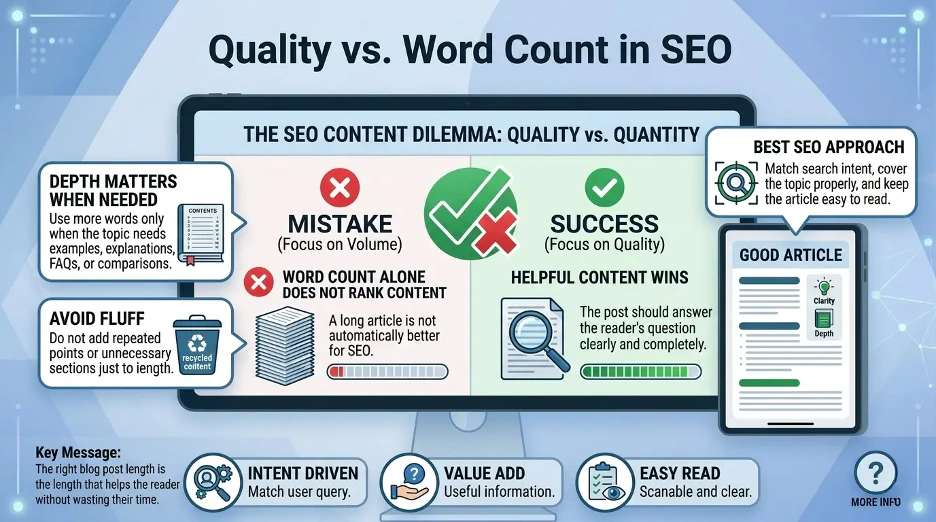
But, the more the words the better the SEO doesn't necessarily mean. A 700-word product description that repeats itself more times than it describes the product is not as helpful to the buyer as a 250-word description that addresses the buyer's intent. The unique and helpful product description is generally more effective than a copy of the manufacturer's text.
Product Description Length for SEO: Best Practice
Aim for 150 words or more of unique content for important product pages for SEO purposes.
This doesn't mean that all products require a lengthy description. However, when you are looking to achieve a product page to show up in organic search, it must have enough original content to differentiate itself from other pages.
Do not copy the information from the manufacturer's description. Having duplicate products will make it more difficult for search engines to determine which page to rank.
Rather, compose original descriptions that mirror your brand, target market and product positioning.
Product Description Length by Page Section
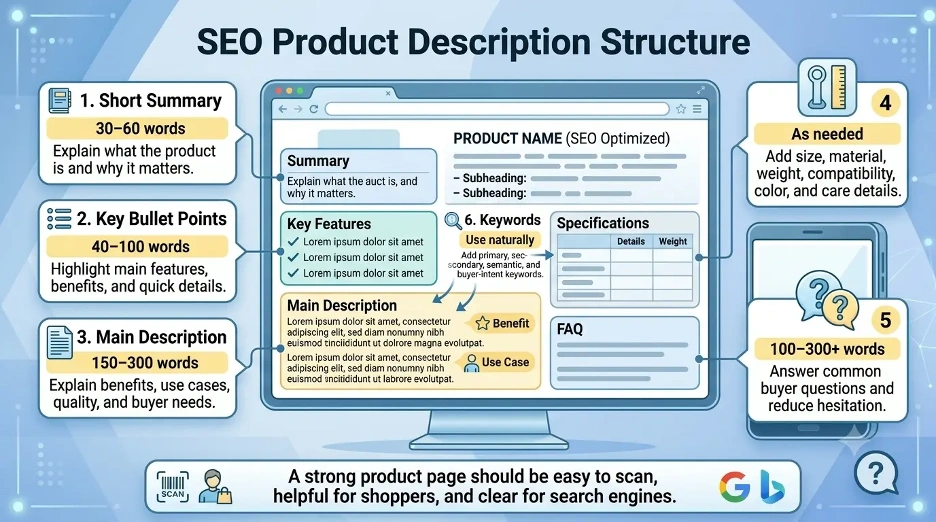
One of the most important things to remember about a high-converting product page is that there are multiple content sections, instead of one giant block. This is the structure we use as it is better for scanning purposes, particularly for mobile shoppers.
It is helpful to have a structure like this:
1. Short Summary: 30–60 Words
This should be near the product title and price. You should make it quickly understandable what the product is and why it is important.
For Example:
This slim, leather laptop bag is ideal for busy professionals, features a padded laptop space, secure zipper pockets, and a versatile shoulder strap for daily carrying.
2. Bullet Points: 40–100 Words
For key features and specifications use bullets.
Example:
- Supports up to 15-inch laptops
- Made with full-grain leather
- Includes padded interior sleeve
- Adjustable shoulder strap
- Zippered exterior pocket
- Work appropriate for work, travel and daily use
3. Main Description: 150–300 Words
The section should include more detail about the product. Highlights the benefits, use cases, quality and customer needs.
4. Specifications: As Needed
Specifications can be presented in paragraphs, but are not required. For information like this, which may be bulleted:
- Dimensions
- Weight
- Material
- Color
- Compatibility
- Care instructions
- Warranty
- Package contents
5. FAQ Section: 100–300+ Words
FAQs are beneficial for both SEO and conversions. They provide answers to frequently asked questions right on the page.
Example questions:
- What is the size of the laptop in this bag?
- Does the leather take water?
- Does it have a luggage strap?
- What is the best way to take care of the leather?
- Can you travel to and from the airport?
SEO Keywords to Use in Product Descriptions
Keywords should be included in a product description on a natural basis. Avoid repeating the exact same words over and over.
Use a mix of:
Primary Keywords
The following are the primary words that represent the product.
Suggested answer: “The leather boots you can wear on your ankle are called leather ankle boots.”
Secondary Keywords
They are used to highlight the main keyword.
Example:
- black leather boots for ankles.
- low heel ankle boots
- women's casual boots
- Fall leather boots
Semantic Keywords
These assist search engines in comprehending context.
For Example:
- side zipper
- cushioned insole
- block heel
- round toe
- everyday wear
- durable leather upper
Buyer Intent Keywords
These are the reasons for which a person is buying.
For Example:
- Walking boots that are comfortable and easy to wear.
- Black boots for work are always a good option to wear.
- Boots for dress and jeans
- fall wardrobe essential
Ideal product descriptions involve the use of keywords in a natural way to the reader.
Where to Place Keywords in a Product Description?
Use key words in:
- Product title
- First sentence
- Main product description
- Bullet points
- Image alternative text, if there are images used.
- Meta title
- Meta description
- URL slug
- FAQ section
- Specifications
There are no images in this article, so no image alt text to add here. For live product pages, descriptive ALT text can enhance accessibility and image search visibility.
Product Description SEO Template
For this simple structure, use this structure:
- Lead sentence: Introduce the product and the user of the product.
- Benefit statement: What can it do to help?
- Highlight information: Include material, size, compatibility, ingredients, or specifications.
- Use case: Demonstrate the use or uses of the product.
- Trust detail: Include warranty, quality, care, safety, or guarantee details.
- Call to action: Motivate the next action.
Example Template:
This [product name] is designed for [target customer] and helps you [main benefit]. Designed with [material or feature] that offers you [supporting benefit] for [specific use case]. It's ideal for [occasion, environment, or need] and you can use it with [related product/use] or every day for [practical outcome]. It's a [product category] for you to choose if you want [final benefit].
How to Make Product Descriptions Detailed but Concise?
These are the rules you should follow to avoid product description repetition without compromising the detail:
- State the greatest benefit first.
- Use short paragraphs.
- Convert specifications into bullets or tables.
- Don't use the same words in multiple ways.
- Eliminate ambiguous words or phrases like “high quality” unless they are clarified.
- Use customer-focused language.
- Provide detail appropriate to the purchase.
- Include FAQs only if they are in response to actual questions.
- Maintain technical details of information that is accurate and understandable.
Each sentence should have a function of informing, persuading, or diminishing a potential customer's hesitation in buying. I always ask myself if the description is clear and answers the buyer's most important questions before i publish it.
Interesting Research Facts
Full citations are in Sources below.
Longer copy works better for high-involvement products
High priced or complicated products usually require detailed descriptions. Research indicated that longer descriptions were better for perceived helpfulness and satisfaction for high-involvement items.
Source: Longer copy works better for high-involvement products
E-commerce conversion rates are typically low
The conversion rate of any online retail site is typically 2%–4% of visitors purchasing products. The small tweaks to product page copy can make a significant impact to revenue.
Copy length should match the product type
Products like tech or specification-based products are more successful in search results with direct and concise information. For experience products like fashion/beauty/lifestyle products, you can describe them in more emotional terms.
Readability matters as much as word count
Readable, structured landing page text is correlated with more positive conversion rates. Dense or disorganized copy can cause consumers to skim or leave before the product.
Product descriptions can influence demand on their own
According to a Stanford NLP research, the wording, length and linguistic style in product descriptions will predict sales, even after controlling for other variables such as price or product identity.
Source: Product descriptions can influence demand on their own
Frequently Asked Questions
1. Do short product descriptions have a negative impact on SEO?
Not always. If the product is simple, and the content is unique, clear and useful, a short description can be effective. The issue is the content isn't substantive enough and it doesn't provide answers to questions that buyers are asking.
2. Do I need to copy the product description from the manufacturer?
No. It's advisable that you create your own product descriptions since many stores have used the same manufacturer's text.
3. Do customers read product descriptions?
Customers read, don't read, read... That's why I'd recommend a short summary, bullet points and detailed info further down the page.
4. What to put in a product description?
List the primary benefit, salient features, dimensions, material, applications, maintenance instructions, compatibility, warranty, and anything else that would make the buyer feel good about the product.
5. A longer product description – is that a positive for ranking?
Not always. A good description will answer the search intent, not be a long description with repeated keywords or unrelated details, in this case a clear 250-word description will do.
6. Are bullet points part of your product description content?
Yes, bullet points can be used to support the product page, where important facts can be easily scanned. They are effective for features, specifications, benefits and speedy buying info.
How we reviewed this article:
Share this article