Uppercase vs Lowercase: What's the Real Difference?
Learn the real difference between uppercase and lowercase letters, their uses, and why they matter in writing, SEO, and readability.
Quick Summary: Uppercase vs Lowercase
- Uppercase letters provide structure and emphasis
Capital letters are used at the start of sentences, in headings, acronyms (like SEO, USA), and proper nouns to highlight importance and organize content clearly. - Lowercase letters improve readability and flow
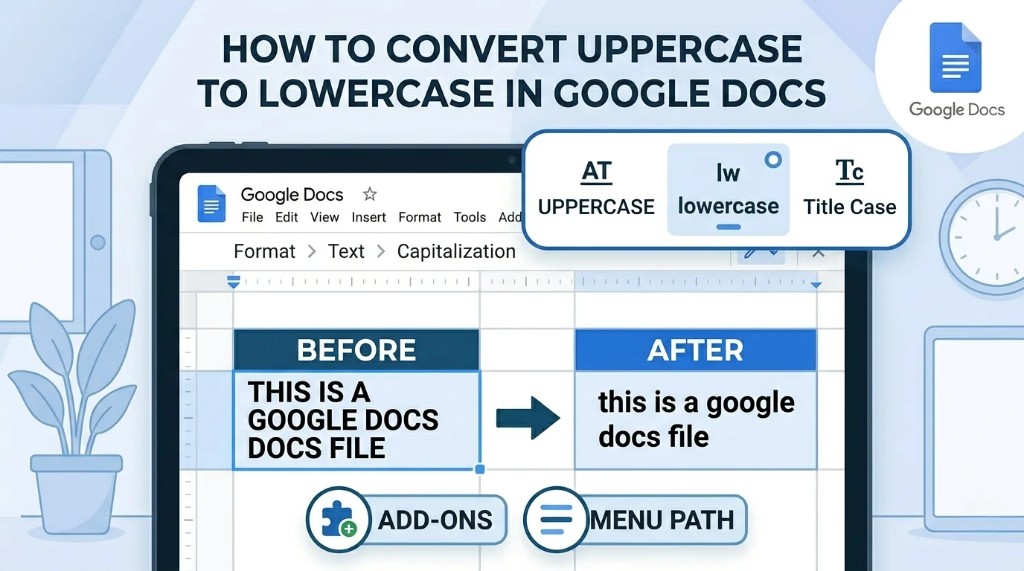
Most written content uses lowercase letters because they make long sentences easier to read—learn how to apply lowercase in Google Docs and other editors. - Case affects meaning and clarity in writing
Some words change meaning depending on capitalization—for example, "apple" (fruit) vs "Apple" (brand name), making correct usage essential. - Uppercase impacts tone and perception
Writing in all caps can feel like shouting in digital communication, while lowercase feels casual and smooth, and sentence case feels professional. - Proper case usage supports better SEO and user experience
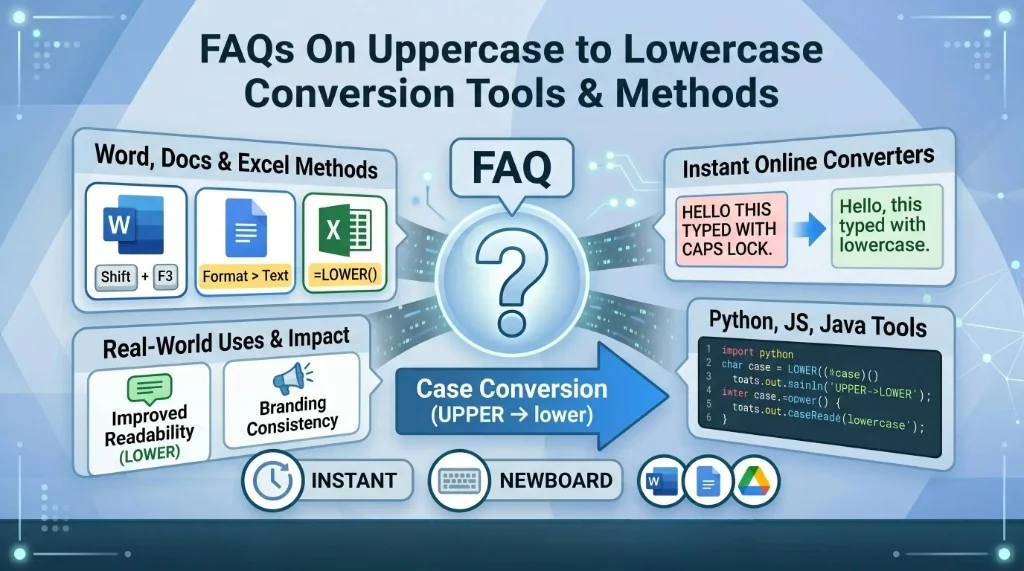
While search engines understand both cases, well-formatted text improves readability and engagement—pair this with our case conversion tools FAQ and keyboard shortcuts for faster cleanup.
Introduction
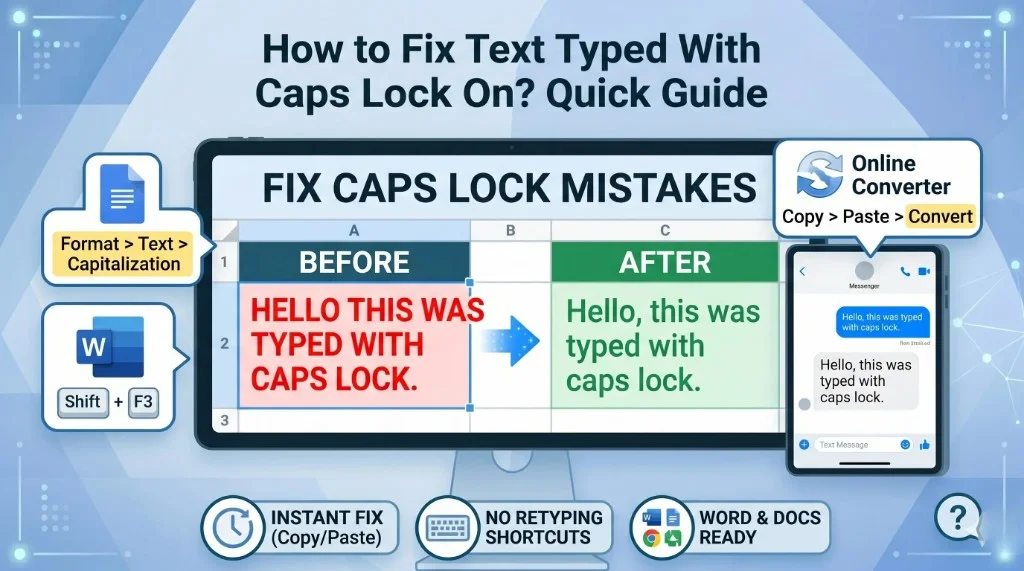
When writing text, we use two main letter styles: uppercase and lowercase. At first glance, the difference looks simple—big letters vs small letters—but in reality, they serve different purposes in writing, communication, branding, and even SEO. If you need to fix accidental ALL CAPS, start with our caps lock quick fix guide or the free online case converter.
What Are Uppercase Letters?
Uppercase letters are the capital letters of the alphabet:
A, B, C, D, E…
They are also called capital letters or majuscule letters.
Where uppercase is used
- Starting sentences: This is a sentence.
- Proper nouns: Pakistan, Google, Muneeb
- Acronyms: NASA, SEO, USA
- Headings and titles: BEST SEO STRATEGY
Purpose of uppercase
Uppercase letters are mainly used for:
- Emphasis
- Structure
- Clarity in formal writing
What Are Lowercase Letters?
Lowercase letters are the small form of letters:
a, b, c, d, e…
They are also called minuscule letters.
Where lowercase is used
- Normal sentence writing
- Articles, blogs, and books
- Most everyday communication
Purpose of lowercase
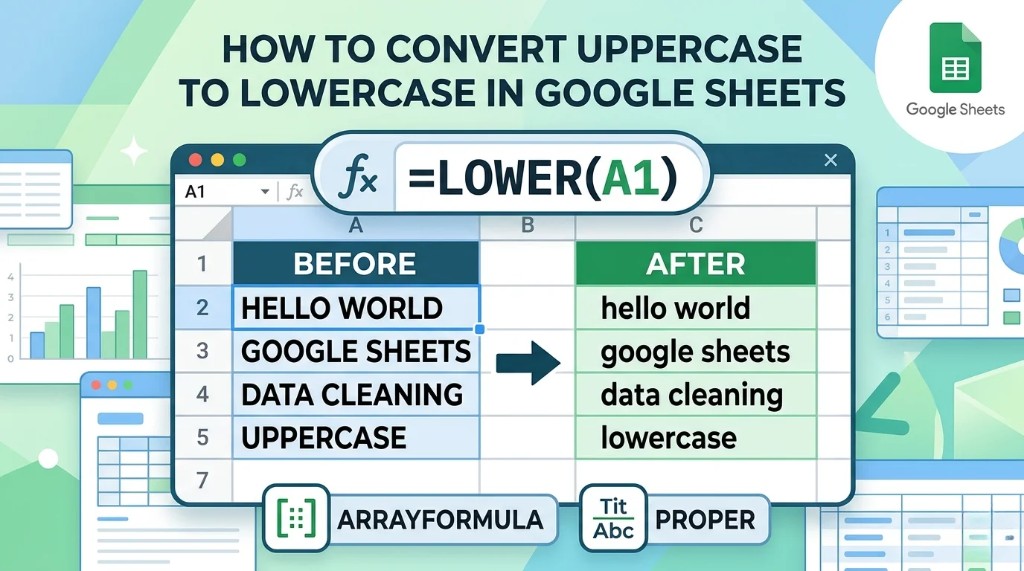
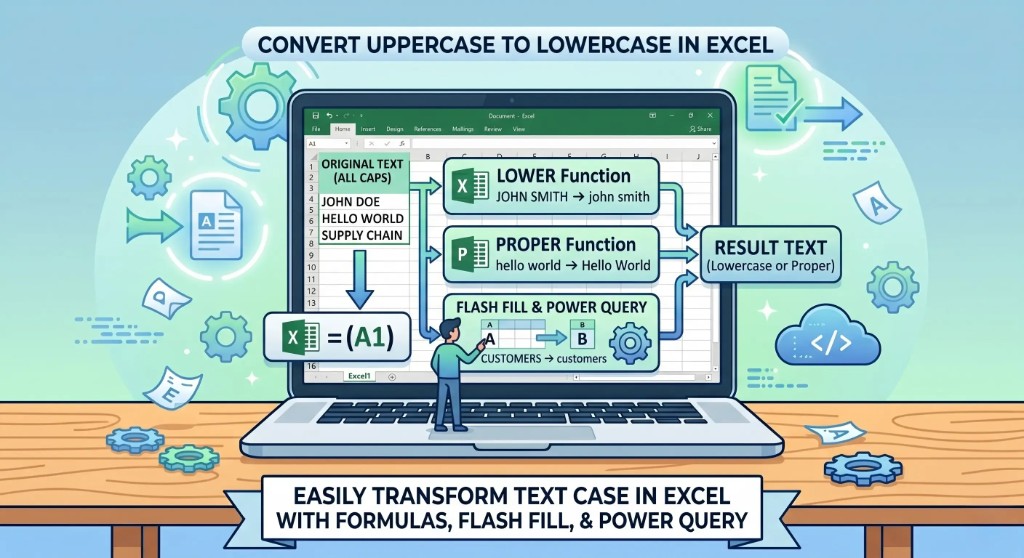
Lowercase letters help improve readability, maintain natural flow, and reduce visual stress. In spreadsheets, teams often normalize casing with Excel LOWER and PROPER or Google Sheets formulas.
Key Differences Between Uppercase and Lowercase
Here's a simple comparison:
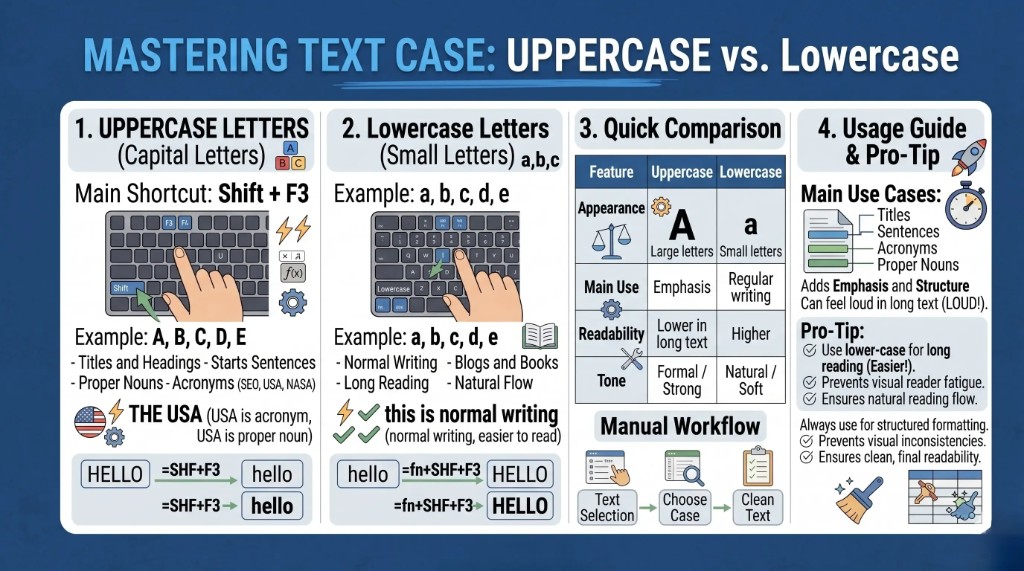
| Feature | Uppercase | Lowercase |
|---|---|---|
| Appearance | Large letters | Small letters |
| Usage | Emphasis, titles, acronyms | Normal writing |
| Readability | Less smooth in long text | Easier to read |
| Tone | Strong / loud / formal | Soft / natural |
| Example | SEO STRATEGY | seo strategy |
Why the Difference Matters
1. Readability
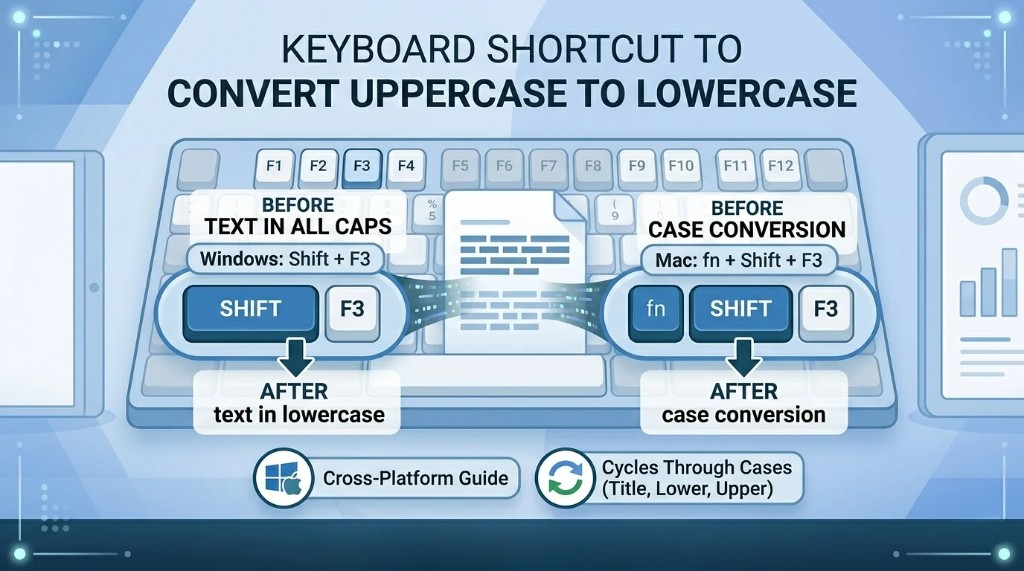
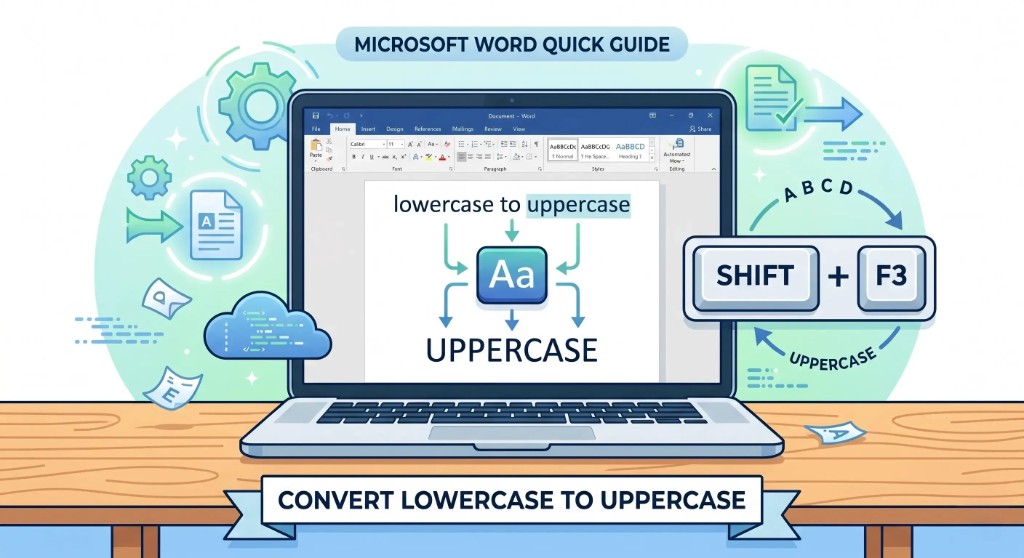
Long sentences in uppercase are harder to read. Lowercase text flows more naturally— Word users can cycle case with Shift + F3 and Mac shortcuts.
2. Meaning and clarity
Case can change meaning:
- apple = fruit (general)
- Apple = company (brand)
3. Tone of communication
- ALL CAPS often feels like shouting
- lowercase feels casual or smooth
- Proper case feels professional
4. SEO and content writing
Search engines understand context, but user experience matters more. Well-formatted text improves engagement and time on page—see our FAQs on conversion tools and methods for practical workflows in editors and code.
When to Use Uppercase vs Lowercase
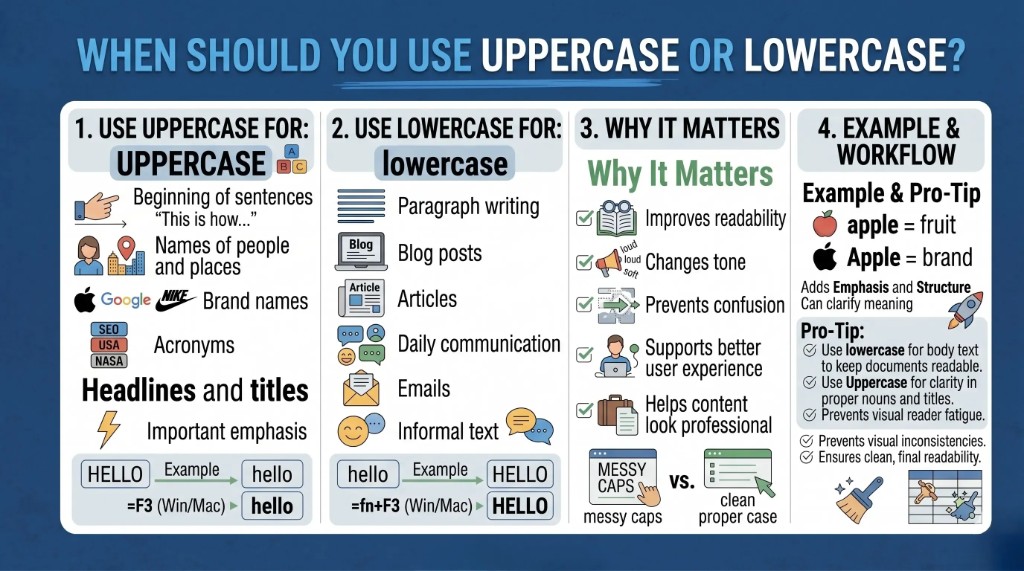
Use uppercase when
- Writing titles
- Highlighting important points
- Writing acronyms
Use lowercase when
- Writing paragraphs
- Creating blog content
- Writing informal text
Final Thoughts
Uppercase and lowercase letters are not just formatting styles—they shape how your message is read, understood, and perceived. Uppercase adds structure and emphasis, while lowercase improves readability and natural flow.
Good writing is not about choosing one over the other—it's about using both correctly.
Frequently Asked Questions (FAQs): Uppercase vs Lowercase Letters
1. What is the difference between uppercase and lowercase letters?
Uppercase letters are capital letters (A, B, C), while lowercase letters are small letters (a, b, c). Uppercase is used for emphasis and structure, while lowercase is used in normal writing for readability.
2. Why do we use uppercase letters in writing?
Uppercase letters are used to start sentences, write proper nouns, acronyms, and headings. They help add clarity, importance, and structure to text.
3. Why is lowercase more common in writing?
Lowercase letters are easier to read in long sentences and paragraphs. They create a smooth reading flow, which is why most books, blogs, and articles use lowercase for body text.
4. Can an uppercase change the meaning of a word?
Yes, sometimes. For example, "apple" refers to a fruit, while "Apple" refers to the tech company. Case sensitivity can change the meaning in writing and digital systems.
5. Is writing in all caps bad?
Writing in all caps is not wrong, but it is often seen as shouting online. It can reduce readability and may feel aggressive in digital communication.
6. When should I use uppercase instead of lowercase?
Use uppercase for titles, headings, acronyms, and proper nouns. Use lowercase for regular sentences and paragraphs.
7. Do uppercase and lowercase matter for SEO?
Yes, indirectly. Search engines understand both, but proper case improves readability, user experience, and engagement—factors that can impact SEO performance.
8. What is the easiest way to convert uppercase to lowercase?
You can use online case converter tools, Google Docs formatting options, or Microsoft Word shortcuts like Shift + F3 to quickly change text case.
Share this article